← All workREPLICAHead of Design · Aug 2020 – Aug 2024
Platform redesign · Rollout · 2020 – 2024
From fragmented research tools to one platform.
From fragmented research tools to unified SaaS platform driving $18M ARR. I led the platform transformation that scaled Replica from hundreds to 10,000+ users while achieving profitability, unifying fragmented analytical tools into a cohesive enterprise platform.
Replica Studio: home, saved work and a Places study on one platform.
Summary · 2 minutes
The short version.
$18MARR Replica reached by 2025, with the platform as a key contributor
100xuser growth supported without a proportional cost increase
90%+retention across government customers
40%reduction in feature delivery cycles
The problem
Replica’s legacy tools were valuable but fragmented across different analytical workflows. Each product served different urban planning needs but operated in silos. Cities and agencies struggled with inconsistent interfaces, making it difficult to derive actionable insights for policy decisions.
The approach
1Start from who we serveProfiles showed who needs raw datasets and who needs guided visuals. We mapped proficiency and confidence, then shaped paths for each group.
2Design the platform, not just pagesOne architecture across Studies, Trends and data access positioned Replica as a platform rather than a collection of tools.
3Systematize the UIA design system with documented patterns, tokens and examples for light and dark, so the team could ship faster with quality.
What we did
01New HomeQuick access to saved work across Trends and Places, plus recent applications.
02Places navigation and filtersSimpler controls, fine-grained filtering and interactive summaries.
03Dataset view with live previewFilter first, see a sample in app, then download with confidence.
04A smarter first mileLight onboarding captures role and geographies, then tailors the first session.
The full story
7 chapters.
01The challenge
Valuable tools, working in silos.
Replica’s legacy tools were valuable but fragmented across different analytical workflows. Each product served different urban planning needs but operated in silos, creating significant barriers to platform adoption and business growth.
With growing market demand for unified urban planning solutions, Replica needed to evolve from research-grade tools to an enterprise SaaS platform. Our goal was to transform these fragmented workflows into a cohesive platform experience that could scale to serve thousands of government analysts nationwide.
02Who we served
Raw datasets or guided visuals.
Understanding our target users was critical for platform-market fit. Existing solutions were either too technical or too simplified for their complex analytical needs.
Profiles showed who needs raw datasets vs guided visuals. We mapped proficiency and confidence, then shaped paths for each group.
03From needs to workflows
One start-to-finish flow.
User research revealed that workflow fragmentation was the primary barrier to platform adoption. By mapping user journeys across multiple tools, we identified opportunities to reduce analysis time by 60% through unified workflows.
Sticky notes map needs by phase, from defining metrics to presenting results.The same needs, turned into a clear start-to-finish flow that links maps, tables, and dashboards.
04Architecture
Designing the platform, not just pages.
This strategic approach positioned Replica as a comprehensive platform rather than a collection of tools, creating sustainable competitive advantages and enabling the pricing strategy that contributed to profitability.
Detailed architecture used to align product, design, and engineering.Object map and key paths across Studio.
05Systematizing the UI
A design system for light and dark.
To ship faster with quality, we built a design system with documented patterns, tokens, and examples for light and dark.
Component library and tokens that cut design to dev time by about 50 percent and raised visual consistency.
06What we shipped
Before and after.
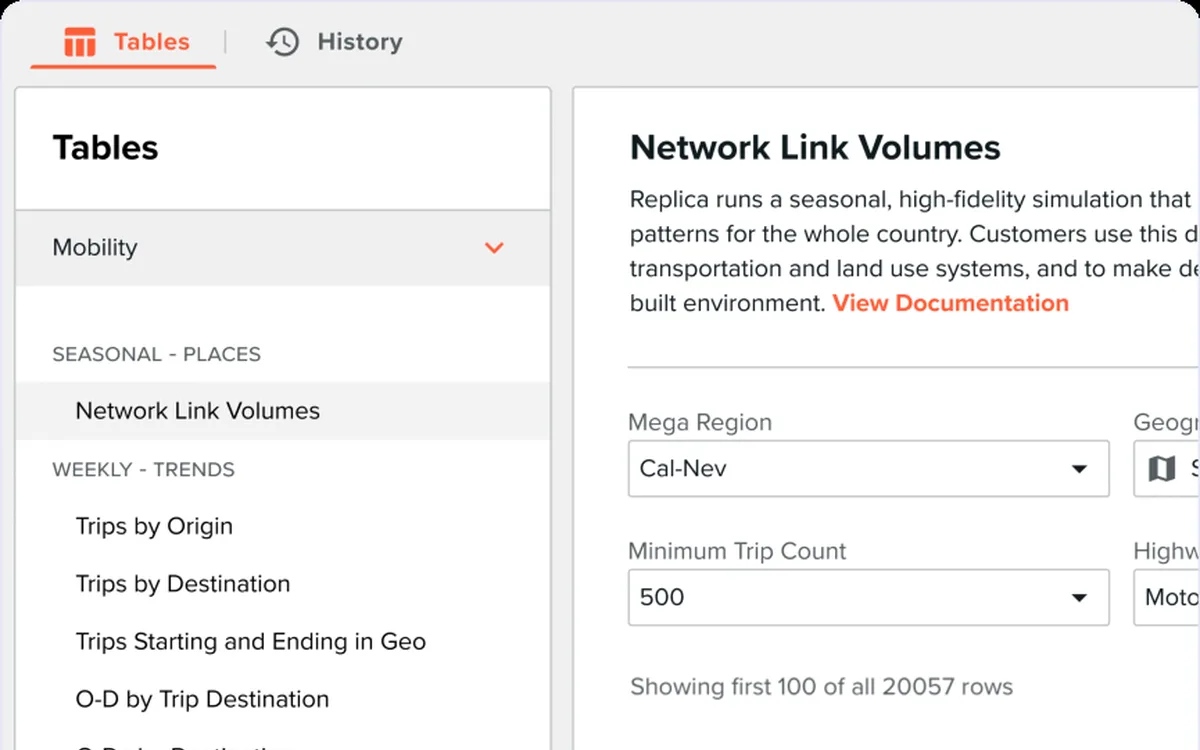
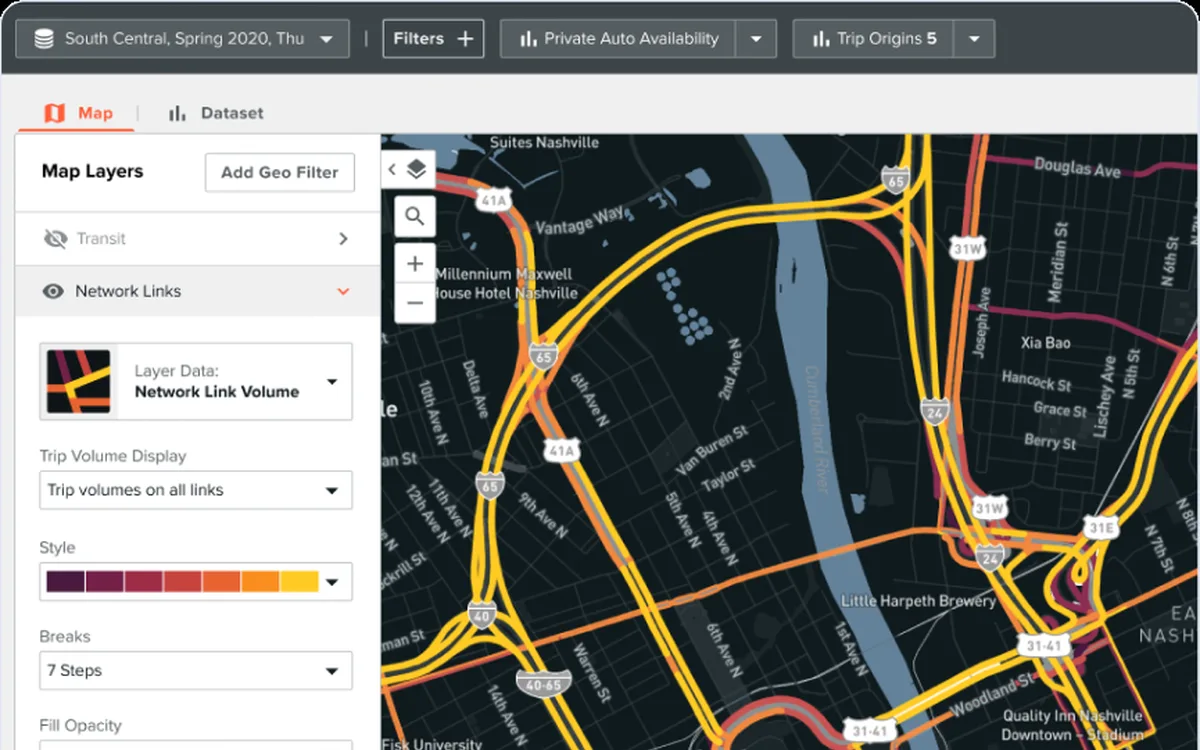
Improved navigation and filters in Places: simpler controls, fine-grained filtering, and interactive summaries to quickly focus on the trips and people that matter.
More control over visualizations: map color palettes, step controls, and transparency settings, plus a streamlined chart view for trips and people.
Dataset view with live preview: filter first, see a sample in app, then download with confidence.
Smarter data downloads: pick only the fields you want and export CSV, Shapefile, or GeoJSON.
New Home: quick access to saved work across Trends and Places, plus recent applications.
Refreshed reference data: clearer access to geographies, land use, and parking datasets.
Design system foundation: reusable patterns for tables, filters, maps, and charts, documented for product and engineering teams.
Application home
Unified dashboard that reduced user onboarding time by 50%, directly supporting customer expansion and reducing churn.
BeforeBefore redesignAfterAfter redesign
Study experience
Streamlined analytical workflows that increased feature adoption rates and positioned Replica for enterprise contract growth.
BeforeBefore redesignAfterAfter redesign
Data access
Old flow forced manual downloads. The new Data Library lets users filter, preview, and export in one place, with clear field docs and controls.
BeforeBefore redesignAfterAfter redesign
A smarter first mile
We added a light onboarding that captures role and geographies, then tailors the first session with relevant apps, studies, and dashboards.
Onboarding captures role and geographies, then tailors the first session.
07Results delivered
Why it matters.
The data did not change. The experience did. Users can now move from question to answer without leaving the product. That reduces context switching, builds trust in the outputs, and shortens the path from exploration to decision.
Strategic outcomesBusiness model transformationEnabled transition from project-based to SaaS revenue model.
Strategic outcomesCompetitive advantagePlatform approach differentiated from fragmented competitor solutions.
Business impactMarket positioningUnified experience became a key differentiator enabling premium pricing.
Product performanceEnterprise readinessPlatform scalability enabled expansion to serve government agencies nationwide.